Introduction
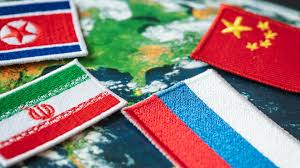
The “Unpackung the CRINK Axis” session at the Center for Strategic and International Studies (CSIS) sought to clarify one of the most significant geopolitical trends of recent years: convergence among China, Russia, Iran, and North Korea across security, economic, and diplomatic domains. Speakers attempted to show how these four countries are building a network of ties that is implicitly portrayed as challenging U.S. influence and leadership. It is worth noting that CSIS is a U.S. think tank active on international policy, economics, and security issues worldwide, with a focus on international relations, trade, technology, finance, energy, and geostrategy. This session is a new product of the Geopolitics and Foreign Policy Department, which encompasses 13 programs and chairs. The department covers the entire world—from Africa to the Americas, Europe, China, the Middle East, and Southeast Asia. The team has been engaged in a 10‑month project examining three dynamics related to the global order, and the present session constitutes the third study in that series.
A group of prominent CSIS executives and researchers, as well as figures from associated institutions, participated in this session. Victor Cha, head of Geopolitics and Foreign Policy, moderated the discussion. Dr. Bonnie Lin, director of the “China Power” project, and Henrietta Levin, a senior fellow in China studies, presented analyses related to China‑specific dynamics. From the Europe and Eurasia domain, Dr. Maria Snegovaya offered comparative perspectives, and in the Middle East domain, Mona Yacoubian put forward policy assessments. In addition, Dr. Andrea Kendall‑Taylor of CNAS—drawing on a security background in the U.S. intelligence community—served as the principal discussant, assessing the strategic dimensions of recent trends.
However, the analyses presented at the session—despite containing noteworthy points and data—rested on a set of theoretical presuppositions and Western‑centric readings that warrant critical evaluation. This report seeks, while systematically framing the session’s content, to clarify its analytical shortcomings and to offer a more realistic picture of the nature of cooperation among these four states.
Examining the Concept of the “CRINK Axis”
One of the session’s foundational themes was the notion that an “axis” exists. Although the following points were mentioned implicitly and in passing, they received limited attention and merit closer examination:
- There is no formal structure, institution, or treaty among China, Russia, Iran, and North Korea.
- Cooperation is predominantly bilateral, and in some cases limited to trilateral arrangements.
- No joint decision‑making mechanism or long‑term four‑party cooperation has been defined.
- Even CSIS speakers acknowledged that there is no evidence of four‑party cooperation.
In light of these considerations, the use of the term “CRINK Axis” reflects less an institutional reality than a Washington‑centric discursive categorization of threat. Accordingly, analyzing these relationships through the template of classical alliances is problematic.
Critical Assessment of the Session’s Security Analysis
Increased security cooperation following the outbreak of the Ukraine war
The CSIS session presented a set of data on transfers of weapons, dual‑use equipment, technology, manpower, and intelligence cooperation in the Russia–Ukraine war. While these data are important, the session’s interpretation of them as a “security axis” is contestable. The main characteristics of these cooperation patterns include:
- Heterogeneous and asymmetric.
- Compartmentalized (weapons from North Korea and Iran; technology from China).
- Lacking a durable coordination mechanism.
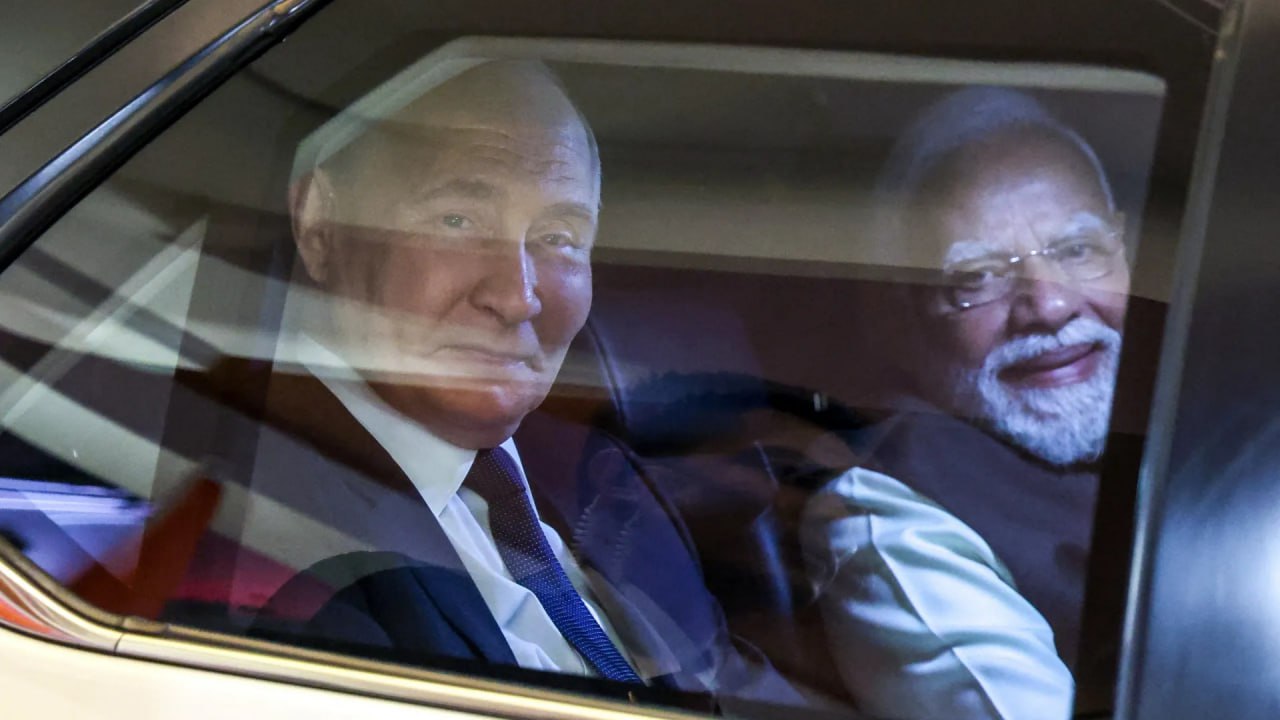
This pattern resembles a division of labor driven by tactical interests rather than the formation of a coherent military bloc. Another contentious feature is the narrowness of the country set considered. Other countries—such as India, which played a meaningful role in Russia’s resilience and ability to withstand pressure in the Ukraine war—were not addressed by the experts. India, despite facing high U.S. tariffs and a wave of criticism from Trump administration officials, increased its oil purchases from Russia and, as its relations with the United States faded, leaned toward Beijing and Moscow.
An incomplete comparison of actors’ behavior (the Ukraine war and the 12‑day Iran–Israel war)
To explain differences in the behavior of Russia, China, and North Korea across the two wars, CSIS points to three variables: “power asymmetry,” “geographic distance,” and “the simultaneity of war and capability attrition.” This explanation is incomplete in several respects:
- a) Neglecting the importance of war duration: the 12‑day Iran–Israel war, by its very nature, left little opportunity for equipment transfers or the mobilization of external support. The session’s experts only referred to this point marginally.
- b) Iran’s lack of willingness to receive assistance: Putin stated explicitly that Iran made no request for assistance—a key variable absent from the session’s analysis.
- c) Overlooking Iran’s defense doctrine: Iran’s doctrine is based on developing and relying on indigenous capacity, which a priori reduces dependence on external support.
- d) Ignoring Iran’s regional position: the session speaks of “power asymmetry,” but pays no attention to Iran’s position in West Asia—a position that shapes not only the security behavior of China and Russia but also dynamics at the global scale. According to the experts, “power asymmetry” meant: “Russia was very powerful and could offer a great deal to others.”
Moreover, if “power asymmetry” is the principal analytic criterion, why did China and Russia align fully with Iran—and against the West—on the snapback mechanism? The session’s experts went so far as to acknowledge that “China is doing everything in its power to prevent the enforcement of sanctions.” This inconsistency indicates that the session’s analysis does not sufficiently rely on the full range of observed behavioral data.
Critical Assessment of the Session’s Economic Analysis
The session examined the rise in Russia–China trade, the role of energy, and the limited involvement of Iran and North Korea. Despite the notable data presented, several fundamental weaknesses are evident in the economic analysis:
Reducing China’s behavior to “fear of sanctions”
Speakers emphasized that China keeps its relations constrained due to concerns about secondary sanctions. Yet the following evidence suggests that China is moving to build long‑term capacities for constructing a new order:
- A marked increase in China–Russia trade after 2022.
- Continued purchases of Iranian and Russian oil despite the most stringent sanctions.
- China’s efforts to create financial infrastructure alternatives to the dollar and to develop parallel institutions.
Neglecting the role of Iranian decision‑making
The low level of Iran’s economic relations with these countries is not solely a function of the other side’s caution. It is rooted in domestic variables within Iran that the report overlooks, including:
- The absence of a codified, east‑oriented economic strategy in Tehran.
- Decision‑making blockage and the lack of a long‑term framework.
- A preference for pursuing solutions through the West.
Critical Assessment of the Session’s Diplomatic Analysis
This section examines the quantitative increase in high‑level diplomatic engagement and the frequency of military parades, with the peak of these relations visible at the recent Shanghai meeting. However, it is necessary to note that these forms of cooperation do not fit within the framework of traditional alliances. The main characteristics of these relationships include:
- A fluid structure without binding commitments.
- Calibration of relations on the basis of shared objectives.
- Calibration of cooperation on the basis of shared threats and short‑term interests.
- The nature of these relations within the framework of “coalitions of convenience.”
As before, this section also does not address the role of other countries and the expansion of their relations.
Conceptual–Theoretical Tensions in Assessing CRINK
The session showed that, among Western experts, there is still no consensus on the nature of the relationship (tactical versus strategic) and its future trajectory:
- Group 1: viewed CRINK as a set of ad hoc and tactical interactions.
- Group 2: presented CRINK as evidence of the formation of an alternative and strategically anti‑American order.
This split reflects the absence of a comprehensive theoretical framework in Western analyses of cooperation among these four actors. Yet, at the overall level, all experts—while trying to downplay these countries’ capabilities—warn about the risks.
Conclusion
Although the “Examining the CRINK Axis” session offered noteworthy data and analysis, the experts’ interpretation is incomplete for the following reasons:
- It is grounded in an exaggerated reading of anti‑American alignment.
- It ignores determining variables (such as Iran’s defense doctrine, the temporal character of war, and Tehran’s structural constraints).
- It contains certain conceptual errors.
Accordingly, cooperation among these four states should not be viewed as an “axis” or a “formal alliance.” Rather, it should be understood as a network of episodic cooperation—based on shared objectives and shared threats, yet lacking durable institutionalization.