Introduction
Over the past two decades, sanctions have been one of the most important strategic instruments of U.S. foreign policy for managing crises, altering the behavior of governments opposed to the West, and preserving global hegemony. This tool was once regarded as a “credible alternative to military action” and a central pillar of American diplomacy, to such an extent that its importance was clearly reflected in the country’s national security documents. However, an examination of the evolving status of sanctions across five different National Security Strategies (from 2010 to 2025) reveals a gradual transformation in their significance, ultimately leading to a decline in their prominence within Washington’s strategic discourse.
The Rise and Fall of the Importance of Sanctions in US National Security Documents
In the U.S. National Security Strategies published in 2010 and 2015, sanctions held a fully strategic and unparalleled position as one of the most effective and central levers of U.S. foreign policy. The 2010 document, for the first time following the global financial crisis, designated sanctions as a “credible and powerful alternative to military action” and emphasized that this tool must be sufficiently robust to alter the behavior of revisionist governments (such as Iran) in line with Washington’s preferences.[1] Five years later, in the February 2015 document, sanctions were addressed by the U.S. administration in an even more serious and in-depth manner.[2] In this document, sanctions were not only described as an “effective and targeted tool for imposing costs on irresponsible actors,” but also presented as a vital component of “principled and pragmatic diplomacy.” The same document repeatedly referenced the “multilateral sanctions regime” against Iran’s nuclear program and the sectoral sanctions against Russia as successful models; for instance, it stated that “U.S. sanctions have demonstrated that the international community can—and will—hold nations that violate their commitments accountable.” This indicates that, during this period, sanctions had become a central pillar of international order-building and deterrence in U.S. foreign policy, and were employed as a key instrument in virtually every major crisis.
Starting in 2017, signs of a shifting perspective on the utility of sanctions became evident in U.S. National Security Strategy documents.[3] In the 2017 document, sanctions retained an important position but were no longer considered effective in isolation; rather, they were presented as “part of broader economic strategies,” alongside anti-money laundering measures, anti-corruption efforts, and other enforcement tools. In this document, the tone regarding sanctions also changed markedly from previous years; for example, instead of emphasizing the alteration of governments’ behavior, the focus shifted to “compelling adversaries through coercion, threat, deterrence, and restriction,” and it was even noted that multilateral pressure is effective only when targeted countries are unable to circumvent it.
Four years later, the National Security Strategy of the United States, dated October 2022, was the last document that still considered sanctions operationally noteworthy and significant.[4] However, the scope and intensity of references to sanctions had diminished compared to previous documents; in the 2022 strategy, mentions of sanctions appeared solely within the framework of the broad coalition against Russia’s invasion of Ukraine. Moreover, sanctions were positioned alongside “export controls” rather than as an independent and leading instrument. The manner in which this issue was addressed clearly demonstrates that, by this point, sanctions no longer held a central role in U.S. foreign policy and had effectively become a complement to other tools, such as military actions and coercive threats.
Ultimately, the National Security Strategy document published in 2025 contained no references whatsoever to sanctions.[5] Throughout this official document, the word “sanctions”—or any of its derivatives or equivalents—does not appear even once, nor is there any reference to this instrument as part of the United States’ foreign policy toolkit. This absolute omission, far beyond a mere stylistic choice or accidental oversight, signals a profound paradigmatic shift in Washington’s strategic outlook: a tool that was once the “front line” of coercive diplomacy is now regarded as so marginal, ineffective, and even detrimental to the projection of power that it no longer merits mention. Its place has now been filled by “technological competition, integrated military deterrence, engagement in global supply chains, positive coalition-building, and direct investment in partners’ capacity-building.” This transformation demonstrates that Washington has reached a strategic conclusion: “In a world where America’s competitors can circumvent sanctions and develop resilience against them, continued strategic reliance on this instrument not only yields diminishing returns but can also be perceived as a sign of weakness and an inability to employ genuine levers of power.” Consequently, the complete removal of sanctions from the 2025 national security discourse is not a random absence but rather an official declaration of the end of an era and the beginning of a new paradigm in American foreign policy.
Indications of a decrease in the importance of sanctions
Sanctions represent one of the most serious threats emerging from political tensions and disputes between governments and the international community, endangering a country’s economic stability by disrupting the flow of foreign trade. For this reason, sanctioned governments are compelled, in order to safeguard their economic security, to design and implement a variety of strategies aimed at mitigating the effects of sanctions. This is precisely why “in the shadow of alleviating and reducing the impacts of sanctions, their significance also diminishes.” In general, if a country does not succumb to sanctions and actively works toward neutralizing them, over time it can not only overcome the consequences of the restrictions but also reach a stage of growth and advancement.[6] In this regard, among the most important strategies for mitigating the effects of sanctions are the expansion and diversification of foreign economic relations, as well as support for indigenous capabilities.[7] The adoption of such strategies drives sanctioned countries toward seeking new partners and deepening relations with governments that have not joined the sanctions.
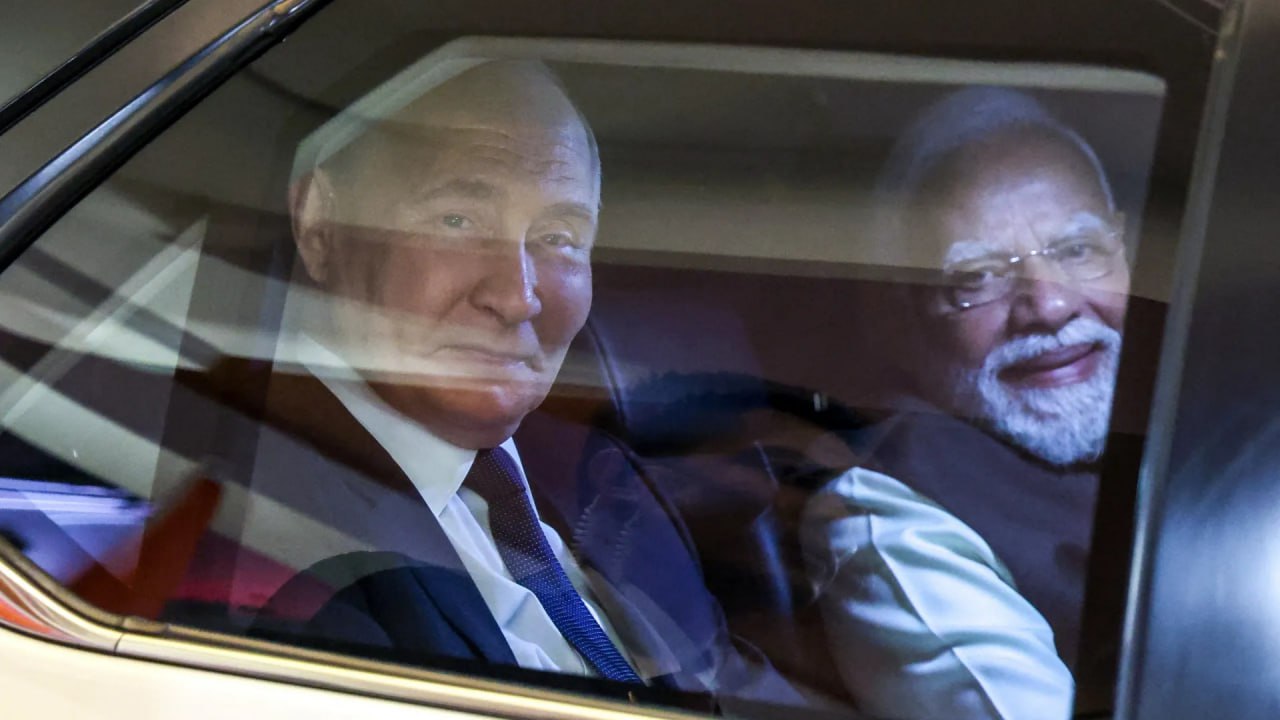
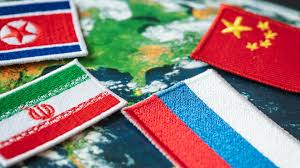
Furthermore, sanctions gradually compel targeted governments to reassess their priorities and redirect national resources toward vital projects and strategic infrastructure. In this process, industries capable of producing substitutes for imported goods and reducing dependence on foreign sources naturally come into focus and receive substantial support.[8] Governments also strive to offset the destructive effects of sanctions and neutralize the inflicted damage as much as possible by strengthening and bolstering domestic economic sectors through supportive policies.[9] Apart from this, targeted governments, if subjected to prolonged sanction pressures from a specific country, will gradually move toward cooperation and alliance-building aimed at countering the sanctioning country.[10] The relative increase in convergence among China, Iran, and Russia—as three countries subject to U.S. sanctions—serves as a concrete example of this phenomenon.[11] In this context, this very increase in proximity among sanctioned countries can reduce the effectiveness of sanctions.
The ineffectiveness of sanctions on Iran
In recent years, Iran has relied on domestic capacities and indigenous technical expertise to reduce its dependence on imports of sensitive equipment, achieving self-sufficiency in many strategic domains. This development stems from the country’s national resolve to counter sanctions and overcome the associated restrictions. The production of radiopharmaceuticals,[12] the processing and supply of domestically produced gasoline,[13] advances in nuclear technology, and the growth of the defense industries,[14] constitute successful examples of our country’s efforts to mitigate the impact of sanctions in these domains. This capability demonstrates that, despite their negative effects, extensive Western sanctions have been unable to halt Iran’s cycle of progress.
Meanwhile, Tehran has intelligently leveraged informal trade networks, shell companies, and neighboring or partner countries—such as Turkey, the United Arab Emirates, and Pakistan—to establish sustainable pathways for meeting its needs, thereby facilitating the circumvention of sanctions.[15] Furthermore, strengthening strategic cooperation with independent powers such as China,[16] South Africa,[17] Russia,[18]and Brazil[19] and active participation in coalitions such as BRICS and the Shanghai Cooperation Organization,[20]can lead to a reduction in the isolation resulting from sanctions. Therefore, given the existing pathways for overcoming restrictions, sanctions—as a tool for isolating countries and imposing the will of sanctioning powers on independent governments—have lost their former efficacy. In this way, cooperation among independent actors in the emerging international order can effectively neutralize existing pressures.
[1] White House Archives, National Security Strategy Document, May 2010
https://obamawhitehouse.archives.gov/sites/default/files/rss_viewer/national_security_strategy.pdf
[2] White House Archives, National Security Strategy Document, February 2015
https://obamawhitehouse.archives.gov/sites/default/files/docs/2015_national_security_strategy.pdf
[3] White House Archives, National Security Strategy Document, December 2017
https://trumpwhitehouse.archives.gov/wp-content/uploads/2017/12/NSS-Final-12-18-2017-0905.pdf
[4] White House Archives, National Security Strategy Document, October 2022
[5] White House Archives, National Security Strategy Document, November 2025
https://www.whitehouse.gov/wp-content/uploads/2025/12/2025-National-Security-Strategy.pdf
[6] European Parliamentary Research Service, Western and Russian Sanctions: What are they? Do they work? February 18, 2022
https://epthinktank.eu/2022/02/18/western-sanctions-and-russia-what-are-they-do-they-work/
[7] Scientific Research Journal of World Politics, Evaluation of Russian Policies in the Face of Sanctions on the Oil and Gas Industries of the Country by the West (2022-2024), November 1404
https://interpolitics.guilan.ac.ir/article_8987_7a287ddfd9753d097ba8c881996ad820.pdf
[8] Scientific Research Journal of Mining Industry, The Impact of Sanctions on the Development of Oil and Gas Companies in Russia, 2022
[9] Scientific Research Journal of Contemporary Political Essays, Fundamentals and Conceptual Components of International Political Economy, 2014
https://politicalstudy.ihcs.ac.ir/article_1411.html
[10] Foundation for Defense of Democracies, Winning the Race of the Red Queen: How U.S. Sanctions Can Outpace Russia’s Evasion, December 9, 2025
[11] Center for Global Security Studies, A New Axis? Bloc Competition and the Future of Conflict, February 2025
https://cgsr.llnl.gov/sites/cgsr/files/2025-03/Axis%20Workshop%20Summary_Feb%202025_Final.pdf
[12] Kayhan Newspaper, Iran’s complete self-sufficiency in the production and use of radiopharmaceuticals by relying on nuclear power, 11 Mehr 1404
https://www.pishkhan.com/news/344532
[13] Mehr News Agency, Sanctions turned into an opportunity; Khatam base produces half of the country’s gasoline, 10 Aban 1404
mehrnews.com/x39t2C
[14] Javan Online website, narration of 47 years of Iran’s resistance and progress in the defense and military fields, 17 Azar 1404
https://www.javanonline.ir/005anO
[15] International Journal of Theoretical and Applied Economics, Technological Development Under Sanction Pressure: The Case of Iran, March 2023
https://en.nbpublish.com/library_read_article.php?id=43862
[16] Atlantic Council, Snapback Sanctions Threaten to Further Derail Iran Nuclear Deal Hopes, September 19, 2025
[17] IRNA News Agency, South African Ambassador to Tehran: We do not accept Western sanctions against Iran, 1 Azar 1401
[18] Hamshahri Newspaper, How do Tehran and Moscow circumvent sanctions? | 10 areas of strategic cooperation between the two countries, 15 October 2025
hamshahrionline.ir/xbpYG
[19] Eqtesaddan website, We stand with Iran despite sanctions, 5th Mehr 1404
https://eqtesaddan.ir/?p=201289
[20] Amwaj Media website, reflection on the story: Will the return of UN sanctions cut off Iran’s economic lifelines? September 2, 2025