Introduction
Following the twelve-day war, Western sources offered diverse—and at times contradictory—interpretations of China’s role. Some emphasized China’s supposed disengagement or indifference toward Iran; others viewed Beijing’s behavior as measured and rational. Yet the dominant media narrative suggested that China had “abandoned” Iran. However, recent reports—first appearing in Yedioth Ahronoth[1], among others—now claim that China is helping strengthen Iran’s missile capabilities, an assertion that appears inconsistent with earlier Western analyses.
This discrepancy in reporting raises the central question of this note: Why do Western sources describe the Iran–China relationship in such contradictory ways, and what strategic implications lie behind these conflicting narratives?
The aim of this note is to show that many of these analyses stem from shallow or one-dimensional readings of the interests and mechanisms shaping Tehran–Beijing cooperation. By reviewing notable cases of contradictory commentary, examining Iran’s strategic value to China—from energy security and sanctions-evasion channels to Tehran’s importance in China’s regional influence—and by critiquing simplistic assumptions about China “abandoning” or “fully embracing” Iran, we seek to present a more realistic picture of how the relationship functions. We argue that Western narrative oscillations reflect an inability to grasp these mechanisms rather than any definitive shift in China’s behavior.
A Failure to Understand the Iran–China Relationship
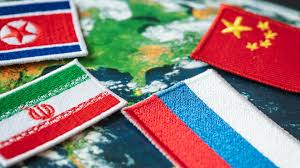
Iran occupies a special place for China across several domains, including energy, sanctions, the U.S. presence in the region, and more broadly, in the emerging world order that Beijing seeks to shape. Iran is the only major actor in West Asia not under Western influence. This matters for China because it ensures a consistently secure stream of energy. Cooperation between the two countries has yielded significant benefits for both sides, especially in countering sanctions.
For instance, Iran sold on average more than 1.5 million barrels of oil per day last month—about 90% of which went to China[2].
It is self-evident that China will always seek to prevent any further expansion of Western influence in West Asia, and will naturally support the Islamic Republic of Iran—the most significant barrier to increased Western penetration in the region. The reason many Western-affiliated media outlets and sources make such contradictory claims is that they have still not understood the significance of Iran–China relations for both sides. Many of them approach the matter in a one-dimensional way.
For example, The New York Times, in a report titled “China and Russia Keep Their Distance From Iran During Crisis[3]” (July 6, 2025), quotes one of its experts as arguing that since China and Russia did not come to Iran’s rescue, the so-called Axis of Upheaval is merely a shell, with no real alliance among the three powers. Although the article contains various viewpoints, the title itself reveals the newspaper’s general perspective: based on a 12-day conflict—during which Iran never requested assistance—they conclude that China and Russia have abandoned Iran.
Michelle Mor[4], a blogger for the Times of Israel, in a report titled “Is China Abandoning Iran?”, interprets the evacuation of Chinese forces and citizens from Iran during the war, and China’s lack of direct assistance, as signs of Beijing distancing itself from Tehran. He argues that China avoids anything that might distract it from its primary battlefield, Taiwan. The author overlooks several essential points:
- China’s concern about a Western victory in the region, which would lead to greater Western focus on containing China
- Iran’s lack of need for third-party assistance given the limited scale and short duration of the conflict
- China’s policy of non-intervention in other countries’ internal affairs
Michael Pillsbury, an expert on the American Fox News network, dismissed early-war reports about several Chinese aircraft landing in Tehran. Citing the fact that the Chinese ambassador to the United States had called for de-escalation, he claimed that China had abandoned Iran[5].
These types of analyses were not few. Based on the news monitoring conducted since the beginning of the 12-day war regarding China’s behavior during the conflict, many magazines, newspapers, and news agencies have produced similar shallow and superficial commentary—revealing a limited understanding of the strategic issues shared between Iran and China. As a result, we repeatedly encounter contradictory interpretations: sometimes portraying China as Iran’s direct supporter, and at other times painting Beijing as a government exploiting Iran.
There is also the possibility that Zionist actors are circulating such reports with intentions such as pressuring China not to assist Iran. This, in itself, reinforces our hypothesis: Western analysts do not have an accurate understanding of the Iran–China relationship—while Zionists do grasp its significance and seek to prevent its expansion.
coclusion
The media output and analytical content produced by most Western sources—some of which we discussed above—demonstrate that many Western specialists still lack an accurate, or at least a comprehensive, understanding of the Iran–China relationship. This has led to the emergence of contradictory statements in the media landscape and in analyses concerning the partnership between the two countries. In a sense, they have fallen into confusion and disorientation.
Judging the depth and trajectory of Iran–China relations should not be based on a single incident or a one-source report; analysts must examine China’s strategic interests, economic mechanisms, and military–diplomatic conduct within a broader horizon and in regional and global context. One must also remain aware of the possibility that third-party actors—seeking to pressure China or influence its policies toward Iran—may exploit information or media narratives to their advantage.
Ultimately, a proper understanding of this relationship is essential not only for analysts who seek a more realistic picture, but also for designing effective and predictable policies in the regional arena.
[1] “Report of the Israeli website Yedioth Ahronoth regarding the possible support of China in strengthening Iran’s missile capability.”
https://www.ynetnews.com/article/s1lk1fhdlx
[2] “Vortexa report on Iran’s oil sales volume in July”
https://www.vortexa.com/insights/iran-oil-july-2025
[3] “Analysis by The New York Times titled “China and Russia Keep Their Distance From Iran During Crisis””
https://www.nytimes.com/2025/07/06/us/politics/axis-china-russia-iran-north-korea.html
[4] The note in Michelle Mor’s blog on the Times of Israel.
https://blogs.timesofisrael.com/is-china-abandoning-iran/
[5] The video of Michael Pillsbury’s interview with Fox News.