Introduction
In the days and weeks following the end of the 12-day war, some Western media outlets attempted to project a particular image of Iran–China relations to public opinion. In their dominant narrative, China—as a major global power—did not provide significant support to Iran during the conflict and, in a sense, abandoned its strategic partner. Such intentional analyses often overlook the complexities of China’s foreign policy, its regional role, and the fundamental principles guiding Beijing’s diplomacy in crises of this kind. Others try to compare the U.S. approach toward the Zionist regime with China’s approach toward Iran, concluding that the U.S. is a more reliable ally than any other country.
This note first explains China’s approach to crises of this nature and then examines Beijing’s handling of the 12-day war, the nature of Iran–China relations, and how this relationship differs from the U.S.–Israel relationship.
How Does China Respond to a Security–Military Crisis?
The People’s Republic of China has consistently emphasized the principle of non-interference in the internal affairs of other countries in its foreign policy, considering it a foundational pillar of the international order it seeks to promote. (China’s positions during the Darfur crisis in Sudan, the Syrian civil war, and its efforts to prevent foreign interventions in both are clear examples of this commitment.)
For this reason, China is reluctant to enter military alliances, which may drag Beijing into unwanted conflicts. Unlike some global powers that resort to direct military intervention or heavy political pressure in regional or international crises (such as U.S. behavior toward countries like Iraq and Syria), China prefers to position itself as a neutral mediator, a responsible actor, and a supporter of peaceful conflict resolution.
This approach fits within China’s grand strategy of building a “Community of Shared Future for Mankind,” a concept emphasizing cooperation, peaceful coexistence, mutual respect for national sovereignty, and resolving disputes through dialogue[1]. China seeks to distance itself from the image of a “power that disrupts the international order” and instead present itself as an actor committed to global stability, relying on diplomacy to reduce tensions. China’s role in facilitating the normalization of relations between Iran and Saudi Arabia also aligns with this framework.
China and the 12-Day War
During the recent war, China strongly condemned the attacks by the United States and the Zionist regime, describing the U.S. strike on Iran’s nuclear facilities as “brazen.” This firm diplomatic stance demonstrated China’s clear political support for Iran.
However, a fundamental question arises:
If China supports Iran so strongly on the political level, why did it not extend this support to direct or field-level involvement? Why, unlike the United States—which intervened actively and directly in support of Israel—did China not take similar action for Iran?
The answer lies in two main factors:
The intensity of the conflict and Iran’s lack of request for third-party intervention
The nature and structure of the bilateral relations each of these countries has with their respective partners
During the 12-day Iran–Israel conflict, one major reason for China’s non-intervention was Iran’s military capability to manage the crisis independently. According to sources such as The Wall Street Journal[2], Iran inflicted significant damage on Israeli infrastructure and military centers without needing direct foreign assistance. Moreover, Iran made no official request for intervention or support from its partners, and Iran and China have no mutual defense treaty. Thus, China’s absence cannot be interpreted as indifference.
China’s behavior must also be understood within the context of the war’s short duration. Comparing 12 days of war in Iran with the first 12 days of the Russia–Ukraine war shows that China did not intervene in that conflict early on either. However, over time, it became one of Russia’s main oil buyers and, according to Business Insider[3], some components used in military equipment now reach Russia through Chinese companies. Therefore, expecting immediate intervention from China in a short-term conflict like Iran’s is inconsistent with Beijing’s foreign policy logic.
In discussing the difference between Iran–China relations and U.S.–Israel relations, it must be noted that the relationship between the United States and the Zionist regime is a deep ideological, strategic, and structural one. Israel, as a regional actor, is essentially a creation of the West designed to contain developments in West Asia—an instrument for advancing the geopolitical interests of the West, especially the United States. This is clearly reflected in the unconditional political, military, and security support the West provides to Israel. In reality, without this military and diplomatic backing, the Israeli regime would not be able to withstand powerful regional actors such as Iran[4].
By contrast, Iran’s relationship with China has a different nature. China views Iran as a strategic partner in West Asia. The 25-year strategic cooperation agreement between the two countries and China’s support for Iran in international organizations attest to this. Moreover, Iran possesses a distinctive feature compared to China’s other regional partners: a shared ideological position with China in opposing the unipolar world order and countering U.S. hegemony (as reflected in the 2016 joint Iran–China statement, which clearly expressed opposition to a unipolar order)[5]. This shared worldview has formed the foundation of a growing strategic convergence between Tehran and Beijing.
The Difference Between Iran–China Relations and U.S.–Israel Relations
The relationship between the United States and the Zionist regime is a profoundly ideological, strategic, and structural relationship. Israel, as a regional actor, is essentially a Western-made project designed to contain regional developments in West Asia—an instrument for securing Western geopolitical interests, especially those of the United States. This is evident in the unconditional political, military, and security support the West provides to Israel.
In reality, the Israeli regime would not survive against powerful regional actors like Iran without this Western military and diplomatic backing.
By contrast, Iran’s relationship with China has a different nature. China views Iran as a strategic partner in West Asia. The 25-year strategic cooperation agreement and China’s support for Iran in international organizations testify to this.
However, Iran has a distinctive characteristic that sets it apart from China’s other regional partners: a shared discourse with China in opposing the unipolar world order and U.S. hegemony. (This is evident in the 2016 joint statement between Iran and China, which clearly expressed opposition to a unipolar order.)
This shared worldview forms the basis of a growing strategic convergence between Tehran and Beijing.
Why Does the West Seek to Create a Rift Between Iran and China?
As noted earlier, given the shared views of Iran and China regarding the desired global order and their opposition to U.S. hegemony, greater closeness between the two countries generates increasing concern for the West—especially in West Asia.
U.S. strategic documents (such as the National Security Strategy and annual threat assessments) state that the U.S. must focus its resources on containing China and avoid dispersing its capacities in regions like Europe and West Asia. Hillary Clinton, the former U.S. Secretary of State, wrote in a 2011 Foreign Policy article:
“The future of global politics will be decided in Asia, not in Afghanistan or Iraq, and the United States will be right at the center of the action.”[6]
This sentence captures the essence of the “Pivot to Asia” strategy—a reallocation of U.S. resources and strategic focus toward the Asia–Pacific to contain China and maintain American global primacy.
However, such a strategy requires the U.S. to first establish a stable and favorable order in other regions before reducing its presence—rather than withdrawing abruptly and irresponsibly. In this context, Iran, as the most important obstacle to U.S. influence in West Asia, and China, as the main global challenger to the American-led order, could, through deeper cooperation, create serious strategic challenges for the West.
Other reasons the West (especially the U.S.) opposes stronger Iran–China relations include:
Fear of weakened sanctions: Iran’s oil exports have nearly returned to pre-“maximum pressure” levels (about 1.9 million barrels per day in June 2025)[7]. Nearly 90% of this oil is purchased by China, reducing the effectiveness of Western sanctions.
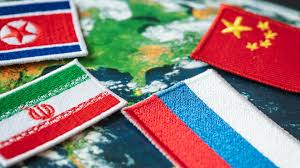
Loss of American dominance in the region: Iranian–Chinese (and Iranian–Russian) cooperation creates a geopolitical axis independent of the West in Central and West Asia. China’s Belt and Road Initiative seeks to expand economic–political influence, and Iran is a key node in this project[8].
Guaranteed access to energy for China: Long-term access to Iranian oil and gas strengthens China’s strategic endurance in its competition with the U.S.
Conclusion
China’s approach to the 12-day war should not be interpreted as indifference or retreat from its strategic partnership with Iran. Rather, it is fully consistent with Beijing’s long-standing and stable foreign policy: prioritizing stability, avoiding direct military involvement, and maintaining geopolitical balance.
China’s understanding of power—unlike the Western view based on confrontation and hard alignment—is grounded in gradual, discursive, and long-term influence.
Thus, China’s strong political support for Iran during the war, while refraining from military intervention, is not a sign of abandonment but a reflection of Beijing’s confidence in Iran’s ability to manage the crisis and preserve the strategic partnership without costly military displays.
What worries the West today is not China’s absence in one short conflict, but China’s growing, enduring, and quiet presence in regional dynamics through mechanisms far less dramatic but far more consequential for shaping the emerging global order.
[1] Explanation of the concept of a Community of Shared Future for Mankind in China’s Xinhua News Agency.”
https://english.news.cn/20230323/6d411c2465664137a7ad8e45ac0de8da/c.html
[2] “The Wall Street Journal report in which a section refers to Iran’s offensive capabilities.”
https://www.wsj.com/world/middle-east/trump-iran-israel-nuclear-program-693a4e2a?mod=e2tw
[3] The Business Insider report regarding China’s military assistance to Russia.
[4] The Middle East Eye report on Israel’s inability to confront Iran.
[5] The 2016 joint statement of Iran and China on the official website of the Presidency of the Islamic Republic of Iran.
[6] Hillary Clinton’s Foreign Policy article titled America’s Pacific Century.
https://foreignpolicy.com/2011/10/11/americas-pacific-century/
[7] The Vortexa report on the volume of Iran’s oil sales to China in June 2025.
https://www.vortexa.com/insights/crude/chinas-iranian-crude-imports-near-record-high-again/
[8] The Diplomat report on the importance of Iran and the motivations of Iran and China regarding the Belt and Road Initiative.