Introduction
Diplomatic language and official statements not only reflect policymakers’ positions, but also themselves act as a decisive factor in shaping the expectations and behaviour of foreign counterparts. In a world where the international system is marked by tension and rivalry among powers, every utterance by an official can convey deeper signals about a country’s resolve, strategy, and capabilities. From this perspective, the remarks of senior officials about foreign partners — particularly about countries such as China, which today play an expanding and influential role in technology, investment, and international politics — should be crafted cautiously, precisely, and in harmony with overarching policy.
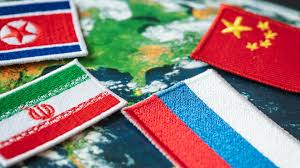
In recent years Iran has, due to sanctions and international pressure, moved toward diversifying its foreign relations, and China has emerged as one of the key actors in this strategy. Yet this process of diversification itself requires a clear discourse and institutional framework; incoherent or ambivalent statements about motives and objectives can make the counterpart doubt the stability and durability of cooperation. Therefore, examining and analysing the language and texts used in interviews and statements, from the standpoint of foreign policy and the country’s strategic interests, is necessary so that the correct message is sent to the other side and diplomatic misunderstandings and fluctuations are avoided.
Problematic Wording
Dr. Larijani, Secretary of the Supreme National Security Council, in a speech on the Khamenei.ir website in response to a reporter’s question about the state of our relations with China and Russia and the extent of our cooperation with those countries, said:
“Well, when Western countries do not work with us, what should we do? Those who say we should not work with them — do they mean we should stand alone? Well, when Westerners don’t work with us, we work with China, we work with other countries. Now, because they [the Westerners] have been very high-handed in their relations with us, we went and established strategic relations with these [other] countries and, frankly, they cooperated with us. In any case, during these sanctions we worked with these countries and with our neighbours. In the realm of politics, there are as many solutions as there are countries. It’s not that if the Westerners, for example, treat Iran roughly, the Iranians will set their reason aside and say ‘please, we surrender, go ahead’! Well, Iran will find another way.”
While some of Iran’s neighbours, such as Saudi Arabia and the United Arab Emirates, have increased tangible cooperation with China and are expanding their ties with Beijing, some in Iran still view China merely as a temporary substitute for periods of sanctions or for when ties with the West are severed or weakened — a view regrettably reflected in parts of Dr. Larijani’s remarks.
China, which now competes with the West globally in various fields including artificial intelligence, electric vehicles, clean energy, and weaponry, and in some instances has overtaken the West[1], can play an important role in Iran’s development process and in investment in the country. But no country will expand relations, especially at a strategic level, when it is not confident that its interests will be secured on the soil of the target country.
Iran matters to China across multiple levels — energy, the security of waterways, preventing an increase of Western influence in West Asia, and shared views with China on a desirable global order and opposition to U.S. domination and hegemony[2]; however, reducing the relationship with China to merely a replacement for the West, instead of relying on these commonalities, will not benefit the country. Such rhetoric not only makes the Chinese side hesitant and concerned about expanding cooperation with Iran, it also reassures Western actors that, at least at the level of some officials of the Islamic Republic, relations with the West remain a priority — and this, in turn, will increase pressure from them. This constitutes a weakness in the diplomatic process.
A Special Necessity
To avoid discursive fluctuations and fragmented decision-making, it is essential that Iran nominates a designated authority to manage relations with China — an authority vested with full powers and entrusted with designing, coordinating, and strategically communicating the country’s ties with Beijing. This designated authority should operate beyond purely diplomatic matters and be active across all political, economic, and cultural domains: planning and following up investment projects, coordinating the political positions of state organs, managing cultural and educational exchanges, supervising the implementation of bilateral commitments, and guaranteeing national interests.
The existence of such a designated authority would not only send a coherent and reliable message to the Chinese side, but, by having the power to take coordinated and binding decisions, would prevent dispersion of positions among institutions and enable the management of potential conflicts of interest and risks. Consequently, this measure would strengthen the stability of cooperation, increase investment opportunities, and elevate Iran’s standing as a reliable and strategic partner.
Conclusion
Given the importance of messaging in the international arena and China’s central role in Iran’s foreign policy horizon, it is imperative that the country’s official high-level discourse be accompanied by a coordinated, purposeful, and sustainable framework. Statements and interviews that portray the relationship with China solely as a temporary substitute for the West can cause Beijing to doubt the durability of cooperation and can signal to Western actors that Iran’s long-term prioritisation of relations is unstable. Such an image can, in turn, impose strategic and economic costs on the country.
Therefore, identifying a responsible authority within the relevant state apparatus to design, coordinate, and strategically communicate Iran’s engagement with China is not a mere administrative recommendation but a strategic necessity. Such an institution could send a reliable message to the Chinese side, anticipate and manage potential conflicts of interest, and — with the necessary authorities — prevent fragmentation and contradiction in the positions of different bodies and organisations. Ultimately, consolidating an institutionalised, coherent approach to interaction with China will both enhance Iran’s national interests and send a clear message to other regional and international actors: Iran seeks relations based on mutual interest and long-term stability, not episodic ties contingent on conditions.
[1] Bloomberg reports on China’s progress around the Made in China 2025 document and compares China’s progress in some of the aforementioned technologies with the West.
https://www.bloomberg.com/graphics/2024-us-china-containment/
[2] Report “Iran, China and the 12-Day War” on the website of ISA center
https://isacenter.ir/3140405070630-2/