Introduction
In U.S. foreign policy, economic sanctions have consistently been employed as a tool to exert pressure on the Islamic Republic of Iran. Over time, various factors have diminished the effectiveness of this tool, thereby undermining U.S. confidence in it. This note seeks to answer the question: “Why has Washington’s confidence in sanctions as a tool for forcing Iran to reconsider its nuclear, ideological, and regional policies diminished? From the author’s viewpoint, five key factors have contributed to this erosion of confidence: the Biden administration’s experience with imposing sanctions, the complexity of Iran’s economic structure, extensive trade relations with countries non-aligned with the West, fatigue resulting from the overuse of sanctions, and the lack of international support for America’s unilateralist policies. Below, we will examine how these factors have affected U.S. confidence in the effectiveness of sanctions against Iran.
Biden’s maximum effort to limit Iran
During the Biden presidency, the United States exerted considerable efforts to pressure Iran. Throughout this period, numerous targets—including Iran’s international fuel transportation networks, institutions and officials involved in weapons exports, and banks and financial institutions—were repeatedly sanctioned in an attempt to deny Iran means of evading sanctions. Yet, despite the continuous escalation of pressure on Iran, this resulted in no reconsideration whatsoever of the country’s nuclear, ideological, regional, or military policies. On the other hand, Republicans capitalized on this issue to undermine the Democrats, accusing them of laxity in strictly enforcing sanctions against Iran.[1]
However, the true reason for Iran’s resilience against Western pressures is not any weakness on the part of the Biden administration in constraining Iran. As Biden himself has acknowledged, more than 600 Iranian individuals and entities were sanctioned during his presidency.[2] Later, Jake Sullivan, Biden’s National Security Advisor, cited a figure of more than 700 sanctioned individuals and entities during the Biden administration.[3] Therefore, the Biden administration has not only failed to reduce the intensity of the sanctions regime inherited from the previous administration but has in fact pursued a policy of escalation in imposing and enforcing sanctions against Iran.[4] Therefore, it does not appear that Donald Trump, the president-elect of the United States, will be able to exert pressure on Iran significantly different from that already applied by the Biden administration. This very issue raises considerable uncertainty about the future effectiveness of sanctions against Iran
The complexity of Iran’s business structure
Economic sanctions constitute a strategic instrument in U.S. foreign policy to exert pressure on Iran. However, the complex structure of Iran’s commercial system has significantly constrained the effectiveness of this tool. This intricate structure, which relies on informal financial networks such as Sadaf Exchange, Bawi General Trading, and Hermex International Corporation, has enabled Iran to withstand sanctions and even develop alternative channels for foreign trade and financing. These channels make the monitoring and enforcement of sanctions considerably more difficult. Moreover, Iran continues to draw on its long-standing experience in employing intermediaries and shell companies to further conceal transactions.
In addition, despite the targeting of key sectors such as the oil and gas industry and entities involved in weapons production, Iran retains access to a diverse range of economic resources that help mitigate the impact of sanctions. For instance, exports in sectors like agriculture, construction, handicrafts, and other non-oil industries remain active and contribute to sustaining the economy. The cumulative result of these factors has been a relative neutralization of sanctions and a marked decline in their efficacy in altering the behavior of the Iranian government.
Increasing the interconnectedness of Iran’s trade relations with non-Western countries
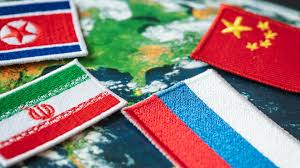
Iran has gained access to pathways for circumventing Western sanctions by expanding its trade relations with non-Western countries, particularly China and Russia. One concrete example is the way Iran exports its oil to China, the world’s largest oil importer. This oil is transported via vessels that facilitate the evasion of international regulations—the so-called shadow fleet. Related payments are typically made in Chinese yuan through financial intermediaries. Under provisions of the 25-year comprehensive cooperation agreement between Iran and China, China pays two-thirds of the purchase price for oil and gas in yuan, with the remaining one-third settled in goods and services.
Furthermore, stronger economic ties with China and Russia—manifested in large-scale economic contracts and Iran’s membership in organizations such as the Shanghai Cooperation Organization—have provided Iran with new instruments to overcome the constraints imposed by sanctions and to reduce its dependence on the Western-dominated financial system. These collaborations have enabled Iran to restore its oil export capacity to pre-sanctions levels, thereby significantly alleviating the economic pressure exerted by the sanctions.
Depreciation of the sanction element due to excessive use
Over time, the extensive and continuous use of sanctions leads to sanctions fatigue and erosion, as their implementation gradually becomes more difficult and international support for such measures diminishes. On the other hand, targeted countries such as Iran gain greater opportunities to adapt to sanctions by developing alternative supply channels, pursuing import substitution, and strengthening domestic economic resilience. This process reduces the pressure exerted by sanctions and gradually renders them less effective.
Moreover, the overuse of sanctions without a multilateral approach or clearly defined objectives can undermine the legitimacy of this tool. Such actions frequently result not in changes in the behavior of targeted countries, but rather in the hardening of their positions, and may even give rise to widespread humanitarian problems—which in turn generate additional resistance to sanctions. In sum, the effectiveness of sanctions depends on factors such as international backing, clear objectives, and the adoption of a smart, well-crafted strategy. The absence of these elements accelerates the erosion of this tool and weakens its capacity to alter the behavior of targeted states.
The international order is not in agreement with America’s unilateral policies.
The lack of international consensus to support U.S. sanctions against Iran, coupled with global resistance to America’s unilateralist policies, has significantly diminished the effectiveness of these sanctions. Numerous countries—including China, Russia, and even some European states—have demonstrated a relative disregard for U.S. sanctions by pursuing independent policies. These actions stem from a declining willingness to submit to American pressure and an increasing determination to safeguard their own national interests.
Major powers such as China and Russia are fundamentally seeking to counter U.S. dominance in the international order. Accordingly, while maintaining commercial relations with Iran, these countries are working to establish alternative financial and trade systems that reduce the constraints imposed by the United States. Meanwhile, many other nations regard unilateral sanctions as violations of international law and refuse to comply with them. This lack of cooperation has resulted in diminished international coordination and a corresponding reduction in the efficacy of economic pressure on Iran.
Conclusion
Despite the Biden administration’s concerted efforts to intensify pressure through U.S. sanctions on Iran, these sanctions have largely lost their effectiveness—particularly since the emergence of a highly complex structure in Iran’s foreign trade—in achieving the objectives pursued by the United States. This complexity has enabled Iran to circumvent sanctions through informal financial networks and extensive commercial ties with non-Western countries such as China and Russia. Iran also continues to draw on its long-standing experience in using intermediaries and shell companies to conceal commercial transactions.
Furthermore, the excessive and prolonged reliance on sanctions has produced sanctions fatigue even among America’s own allies. The resulting global inattention to Washington’s unilateralist policies, combined with the lack of international coordination and active counteraction by certain states—most notably China and Russia—has substantially alleviated the economic pressure on Iran. As a result, the United States finds itself in a state of strategic uncertainty regarding the continued use of sanctions against Iran. Ultimately, sanctions have not only failed to alter Iran’s behavior but also, over time, exerted progressively weaker effects on its economy. Consequently, irrespective of domestic political controversies in which Republicans accuse Biden and the Democrats of laxity in enforcing sanctions, sanctions as an instrument have fundamentally lost their former significance and coercive power for the United States—regardless of whether a Republican such as Trump or a Democrat occupies the White House.
[1] U.S. Congress website, Iran: Background and U.S. Policy, September 6, 2024
https://crsreports.congress.gov/product/pdf/R/R47321
[2] Official White House website, Statement from President Joe Biden on Iran Sanctions, April 18, 2024
[3] Official White House website, Statement from National Security Advisor Jake Sullivan on Expansion of Sanctions on Iran Following Attack on Israel, October 11, 2024
[4] Shaming Liang, From Donald Trump to Joe Biden: The Adjustment and Continuity of US Policy on Iran’s Nuclear Program, September 13, 2023
https://www.ewadirect.com/proceedings/aemps/article/view/2797/pdf