Introduction
Following the imposition of two new sanctions packages against Russia on October 23, considerable attention was directed toward the reaction of Russian officials to these measures. The sanctions were imposed by two major actors sanctioning Russia, namely the United States and the European Union. The significance of the U.S. sanctions lies in the fact that they constitute the first sanctions imposed after Trump’s return to the White House. At the same time, the European Union has also introduced extensive sanctions that target actors operating in third countries.
From Toilet Bowls to Russia’s Largest Oil Companies
The sanctions imposed on 23 October targeted a wide range of areas across Russia’s energy sector, trade, and military-industrial complex. Both sanctions packages broadly targeted entities affiliated with Russia. It is worth noting that one week prior to the imposition of these two sanctions packages, the United Kingdom had also announced 90 new sanctions against Russia.
Trump’s Sanctioning of Two Oil Giants
The U.S. action focused on targeting two major Russian oil and gas companies, namely Rosneft and Lukoil. In addition, 36 subsidiaries of these two companies were also targeted. Among these entities were companies such as Bashneft, the Ryazan Refinery, and the Saratov Oil Refinery. Together, these companies form a vast segment of Russia’s oil and gas industry. They are involved across the entire value chain, including oil and gas exploration and extraction, transportation, refining and processing. Notably, the list of targeted entities also includes the research company Russian Fuel and Energy Innovation.
The companies involved are regarded as significant participants in domestic and overseas oil and gas projects. Some of these companies are active in exploration and extraction projects in Iraq and Azerbaijan, as well as in several European countries such as Hungary and Slovakia. Accordingly, the new sanctions may be viewed as a potential threat to the activities of these companies in Europe and West Asia.
Everything Under EU Sanctions
A few hours after the United States imposed sanctions, the European Union also announced its 19th sanctions package against Russia. This sanctions package covers a very wide range of sectors and even added items such as toilet bowls to the list of prohibited goods. It also targets the energy sector, financial and banking sectors, as well as legal and service-related restrictions. In the energy sector, in addition to plans to ban LNG imports from Russia, sanctions were imposed on operators from third countries involved with Russia’s energy revenues. These individuals and entities are based in China, Hong Kong, and the UAE. The package also included the full sanctioning of Rosneft and GazpromNeft, marking another major measure in the energy sector. Furthermore, 117 vessels from Russia’s shadow fleet were added to the sanctions list.
The sanctions are also extensive in the financial and monetary sectors. They include the targeting of five smaller Russian banks, a ban on the use of Russia’s Mir banking system and the Fast Payment System (SBP), and sanctions on financial institutions, banks, and exchanges in Belarus, Kazakhstan, China, Kyrgyzstan, Tajikistan, and Paraguay. Russian-linked cryptocurrency activities are also part of the new measures.
In the trade sector, hundreds of goods and product codes have been added to the sanctions list against Russia. These include items related to imaging and sensors, high-energy materials and precursors, chemicals, metals, alloys, composites, electronics, vehicles and their components, as well as optical equipment and devices. Companies and traders in China and the UAE involved in circumventing sanctions on goods and technology to Russia have also been targeted. Additionally, 45 entities linked to Russia’s military-industrial complex have been sanctioned, including 28 based in Russia and 17 in third countries such as China, Hong Kong, India, and Thailand.
In addition to all the measures mentioned above, the package imposes restrictions on Russia’s special economic zones and bans on services and technology transfers in the fields of space and artificial intelligence. It also includes a five-year ban on reinsurance services for ships and aircraft sold by Russia to third countries. Furthermore, restrictions on travel for Russian diplomats to Europe have been introduced under the 19th sanctions package.
In this way, the 19th sanctions package can be seen as Europe’s attempt to sanction virtually every aspect of Russia’s economy—an action that could further reduce economic ties and interactions between Russia and Europe.
So far, the pressures have failed to influence Russia’s decisions.
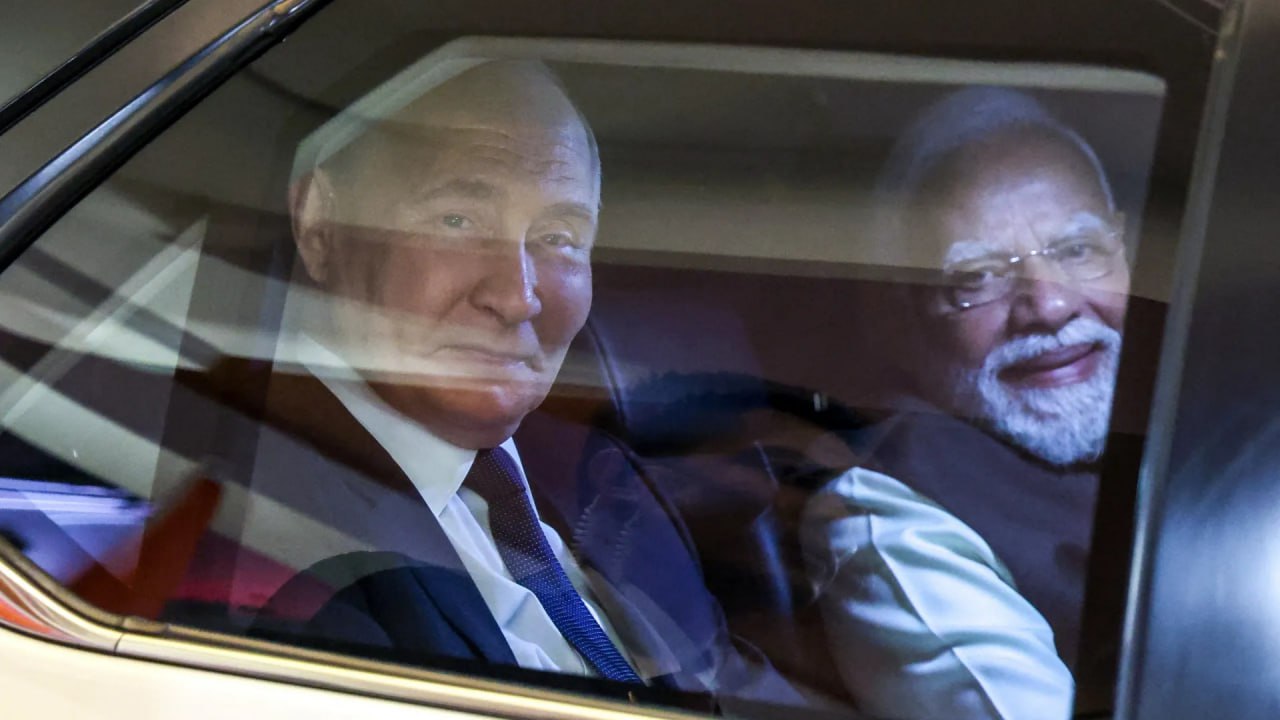
Despite the sweeping sanctions imposed on Russia by the West in just one week, Vladimir Putin’s response to these measures has been notable. The Russian president, reacting to the sanctions with mockery, analyzed the new packages in two main areas, describing them as having both political and economic dimensions. Speaking at a press conference following a meeting of the Board of Trustees of the Russian Geographical Society, he stated:
“The fact that they cancelled imports of our toilet bowls will cost them dearly. I think they will need them if they keep the same policies with regard to the Russian Federation.”
Putin acknowledged the seriousness of the new sanctions but expressed doubt about their impact on Russia’s economic well-being:
“Now, regarding the new sanctions. First, there is nothing new about them. Clearly, they will have serious implications for us, but they will not significantly affect our economic well-being.”
He argued that Trump’s sanctions did not surprise him, as they have existed since his first presidential term, and in fact, Putin seems to be signaling that he had expected such measures from Trump:
“It is well known that during his first presidential term, President Trump imposed the largest number of sanctions ever imposed on the Russian Federation.”
Next comes the most significant part of Putin’s remarks. He characterized the sanctions as having two main objectives: political and economic.
“Today, they have two aspects, namely, political and economic.”
He began by outlining the political objectives of the sanctions. According to Putin, the political aim of the recent measures is nothing more than to increase pressure on Moscow and influence its decisions. However, he made a notable point: he believes that countries that value their dignity and standing will not change their decisions under sanction pressure. The Russian president stated in this regard:
“What are we talking about in terms of the political aspect? It implies an attempt to put pressure on Russia. But no self-respecting country and no self-respecting people ever make decisions under pressure. Without a doubt, Russia has the privilege of considering itself among those self-respecting countries and peoples. That is the first point.”
From an economic perspective, Putin paid close attention to the Western sanctions’ objectives. He sees the main aim of the new sanctions as targeting the Kremlin’s oil revenues. However, Putin believes that Russia’s large volume of oil exports presents a significant obstacle to removing it from the global market. He stated:
“Regarding the economic aspect, I reiterate once again that there is certainly nothing good or pleasant here. However, if we examine the economic side of these sanctions objectively and professionally, what do we observe?”
“At present, the United States, in my view, produces approximately 13.5 million barrels per day, ranking first. Saudi Arabia is second with around 10 million barrels, and the Russian Federation is third with roughly 9.5 million barrels per day. However, the United States consumes 20 million barrels. They sell some and purchase even more, primarily from Canada. Thus, they produce 13.5 million but consume 20 million.”
“Meanwhile, the Russian Federation and Saudi Arabia sell more oil and petroleum products. I may be mistaken in some details, perhaps mixing something up on the spot, but the general order aligns with reality. And what is that reality? Saudi Arabia exports approximately 9 million tonnes of oil and petroleum products to external markets, while the Russian Federation exports 7.5 million. That is to say, our contribution to the global energy balance is very significant, exceedingly so. Currently, this balance serves both consumers’ and producers’ interests. Disrupting this balance is a highly thankless task, including for those attempting to do so. Why?”
Then he went on to explain the situation of the top oil suppliers and Russia’s position in the global oil market. Putin also addressed what would happen if Russian oil were removed from the market or if its supply were reduced. He clearly traced the potential negative effects of such a scenario at petrol stations in the United States. The Russian president stated:
“First, it must be noted that overall production is currently at a plateau. Of course, a portion – though certainly not all, as that would be impossible – of Russian oil and petroleum products could be substituted on the global market. But, first, this requires time. Second, it demands substantial investment.”
“(…) if the quantity of our oil and petroleum products on the global market were to decrease abruptly, prices would rise, and I have discussed this with my American counterpart as well. What would this lead to? It would result in a sharp increase in the cost of oil and petroleum products, including at petrol stations – and the United States is no exception.”
Summary
Thus, what can be inferred from Putin’s view of the recent Western sanctions is their lack of impact on Russia’s leadership and decision-making. He considers Russia’s status and identity in such a way that increasing pressure and using coercive measures to change its major decisions is unacceptable. This perspective reflects Putin’s strategic and overarching objectives regarding Russia’s position in the future.
At the same time, he not only resists the pressures and economic threats posed by the sanctions, but also signals warnings to his American counterparts, while framing the negative impacts of the anti-Russian sanctions as primarily affecting European countries. Putin demonstrates a clear understanding of the updated and strategic objectives of Western sanctions—namely, targeting Russia’s oil revenues. This insight enables him and the Russian government to implement effective countermeasures against the sanctions.
Undoubtedly, Russia’s approach and response to Western sanctions can serve as a lesson for Iranian officials. This is particularly relevant when, following each new sanctions measure and without a careful assessment of its core objectives, they move toward negotiations and concessions.