Introduction
After World War II and the defeat of Nazi Germany, a world order emerged based on the two major powers of the time. With the decline and collapse of the Soviet Union, the balance of power shifted entirely toward the United States, which became the undisputed global superpower. Consequently, the international order was shaped around the United States, and global rules and institutions were designed in line with the interests of the West under American leadership.
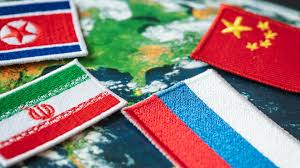
Today, however, circumstances have changed. The rise of revisionist powers such as China and Russia on the global stage—and Iran in West Asia—along with America’s inability to resolve its disputes with these actors, have altered the landscape. The United States now faces growing challenges across multiple domains, including its economic dependence on China—its main strategic rival—and its inability to bring the Ukraine war to an end. Measures taken by Washington to address these issues have so far produced no real results. China grows stronger by the day and continues to surpass the United States in various arenas. For years, China has made clear—both in its official discourse and its actions—that it seeks to transform the U.S.-led international order.
This article examines China’s preferred world order, the steps it has taken to realize it, and why Iran must adopt a perspective centered on the transformation of the global order and the decline of American dominance.
China’s Statements on the Desired Global Order
Chinese officials have repeatedly emphasized that the world must move away from unilateralism and shift toward multilateralism. China consistently presents itself as a defender of international law and as a country committed to the principles of the United Nations. In other words, “changing the order” for China does not mean dismantling the UN or international law. Rather, it seeks to reshape the rules, interpretations, and balance of power within the same system to reflect its own priorities—national sovereignty, non-intervention, and development-oriented governance. This is “major reform,” not “revolution,” accompanied by criticism of the notion that the so-called “rules-based order” is, in practice, merely the rules of a handful of Western states[1].
Chinese officials have frequently criticized American unilateralism. In all such statements, unilateralism is rejected and multilateralism is promoted. In 2009, Hu Jintao—then General Secretary of the Communist Party and President of China—said in his UN General Assembly speech that the world was moving toward multipolarity and greater economic globalization, and that multilateralism and the democratization of international relations were deeply rooted in the hearts of the people[2].
Such statements became even more prominent after Xi Jinping came to power. At the recent Shanghai Cooperation Organisation (SCO) summit, Xi stated:
“We must firmly oppose hegemony and power politics, uphold true multilateralism, and serve as a pillar for promoting multipolarity and the democratization of international relations.”[3]
Similarly, on May 15, 2024, Chinese Foreign Minister Wang Yi—responding to U.S. tariff hikes on Chinese goods and sanctions against Chinese institutions—said:
“Unilateralism and protectionism run counter to the trend of our times and will certainly be crushed by the wheels of history. At this critical moment for global economic recovery, the international community must tell the United States: stop creating more trouble for the world.”[4]
China’s Actions Toward Reshaping the Global Order
Global Initiatives
In recent years, China has introduced new concepts under the banner of major global initiatives. Many researchers believe these initiatives are designed to reform or reconstruct the current world order.[5]
The ideological foundation underlying all of these initiatives is the concept of a “Community of Shared Future for Mankind.” This concept holds that humanity lives in an interconnected world where the destinies of different nations and peoples are inseparable. All societies share a common “home,” facing shared challenges—environmental, technological, economic, and security-related. Thus, countries must operate based on mutual respect, shared interests, win-win cooperation, and global justice to overcome these challenges. This concept was first introduced by Xi in 2013 and officially declared the core objective of China’s foreign relations in 2023[6].
Global Security Initiative (GSI)
Proposed by Xi in 2022 and elaborated in China’s February 2023 “concept paper,” the GSI outlines security principles based on shared, comprehensive, cooperative, and sustainable security; respect for sovereignty and territorial integrity; adherence to the UN Charter; and consideration of the legitimate security concerns of all states[7].
Western analysts view this as part of China’s effort to redefine international security governance. The International Institute for Strategic Studies (IISS), for instance, writes that the GSI enables China to play a more active role in shaping global security frameworks and revising existing mechanisms from within[8].
Global Development Initiative (GDI)
Introduced in Xi’s 2021 UN General Assembly speech, the GDI emphasizes five principles: development-centeredness, people-centeredness, inclusivity and justice, innovation, and harmony between humans and nature. China claims the initiative provides a “global public good,” promoting stronger, greener, healthier, and more inclusive development worldwide[9].
Western analysts also view it as an instrument through which China seeks to shape the global development agenda and expand its influence in global governance.
Global Civilization Initiative (GCI)
Launched in March 2023, the GCI promotes respect for civilizational diversity, mutual learning, and the rejection of imposing Western value models on others. China emphasizes global networks of civilizational exchange and people-to-people connectivity. Western observers see the initiative as part of China’s attempt to redefine the cultural and ideological dimensions of the global order.
Alternative Institutions
One method China employs to counter American unilateralism is creating or strengthening institutions parallel to U.S.-influenced organizations.
For example:
Shanghai Cooperation Organisation (SCO):
Focuses on combating the “three evils” (terrorism, separatism, extremism) and fostering cross-border security and economic cooperation — all without U.S. involvement — thereby neutralizing Washington’s security initiatives around China[10].
Asian Infrastructure Investment Bank (AIIB):
Launched in 2016 with more than 110 members, it provides sustainable infrastructure financing in Asia and beyond. The U.S. is not a member and has taken a cautious, often critical stance toward it, while the AIIB offers funding alternatives outside U.S.-controlled institutions like the World Bank and IMF[11].
Lessons for Iran
China has demonstrated that when an existing world order restricts national growth, countries must challenge and transform it. For years, the U.S.-led global order has harmed Iran across multiple dimensions—economic sanctions, financial blockades, military threats, and psychological and information warfare.
Just as Chinese strategists have concluded that opposing the Western “rules-based order” is necessary to preserve national interests, the Iranian intellectual and policy elite must also adopt this outlook. A national consensus on this issue will strengthen Iran against threats and increase the cost for powers attempting to preserve the current order.
Conclusion
A review of China’s ideas, policies, and actions toward shaping a new global order reveals that Beijing seeks not merely to collapse the American-led order, but to redefine it around principles of justice, balance, and multilateralism. China recognizes that the world no longer tolerates unilateral dominance or imposed models, and that sustainable growth requires a cooperative and balanced order. By leveraging its economic, diplomatic, and institutional power, China is actively constructing the foundations of the future global order—one built not on coercion but on cooperation, mutual respect, and shared development.
For Iran, this shifting order holds profound implications. The emerging global system creates a historic opportunity for countries like Iran to move beyond the margins of the Western-centric order and participate meaningfully in shaping new international structures. China, through elite consensus, long-term planning, and soft-power strategies, has accelerated the transformation of the global order. Iran, too, can assert its role as an independent regional power opposed to the current system and secure its place in the evolving geopolitical landscape.
In a world where the old order is declining, neutrality or passivity is itself a form of defeat. Iran must—just as China has—reframe elite understanding of global power realities, shed psychological dependence on the Western order, and, with a focus on long-term national interests, become one of the architects of the emerging global order—an order grounded in multilateralism, mutual respect, and international justice.
[1] Wang Yi’s speech published on the website of the China International Development Cooperation Agency.
http://en.cidca.gov.cn/2021-07/08/c_641268.htm
[2] The Chinese Ministry of Foreign Affairs report on the aforementioned speech.
[3] The text of Xi Jinping’s speech
https://www.gov.cn/yaowen/liebiao/202509/content_7038671.html
[4] The report on Wang Yi’s speech published on the website of the Chinese Ministry of Foreign Affairs.
https://www.mfa.gov.cn/eng/wjbzhd/202405/t20240515_11305137.html
[5] The analytical report of the American website Atlantic Council titled ‘How Beijing’s Newest Global Initiatives Seek to Reshape the World Order.’
[6] The website of the Ministry of Foreign Affairs of China.
https://www.mfa.gov.cn/eng/wjbzhd/202501/t20250127_11546599.html
[7] The conceptual framework of the Global Security Initiative
https://en.chinadiplomacy.org.cn/pdf/The_Global_Security_Initiative_Concept_Paper.pdf
[8] The aforementioned report from the IISS (International Institute for Strategic Studies).
[9] The conceptual framework of the Global Development Initiative (GDI)
https://www.mfa.gov.cn/eng/zy/jj/GDI_140002/wj/202406/P020240606606193448267.pdf
[10] The note published by the Shanghai Cooperation Organisation about itself.
https://eng.sectsco.org/images/07e8/0c/14/1625960.pdf
[11] The governance structure of the Asian Infrastructure Investment Bank (AIIB).
https://www.aiib.org/en/about-aiib/who-we-are/yearbook/detail/governance-comparative/index.html